
Piles surgery in Hyderabad
Piles (haemorrhoids) are one of the most common, and most under-reported, surgical conditions. At Apollo Hospitals, Hyderabad, Dr. Sujeeth offers minimally invasive piles surgery including laser haemorrhoidectomy, with minimal post-operative discomfort and a return to normal life within days.
All major Mediclaim and cashless health insurance accepted (Apollo Hospitals TPA desk support).
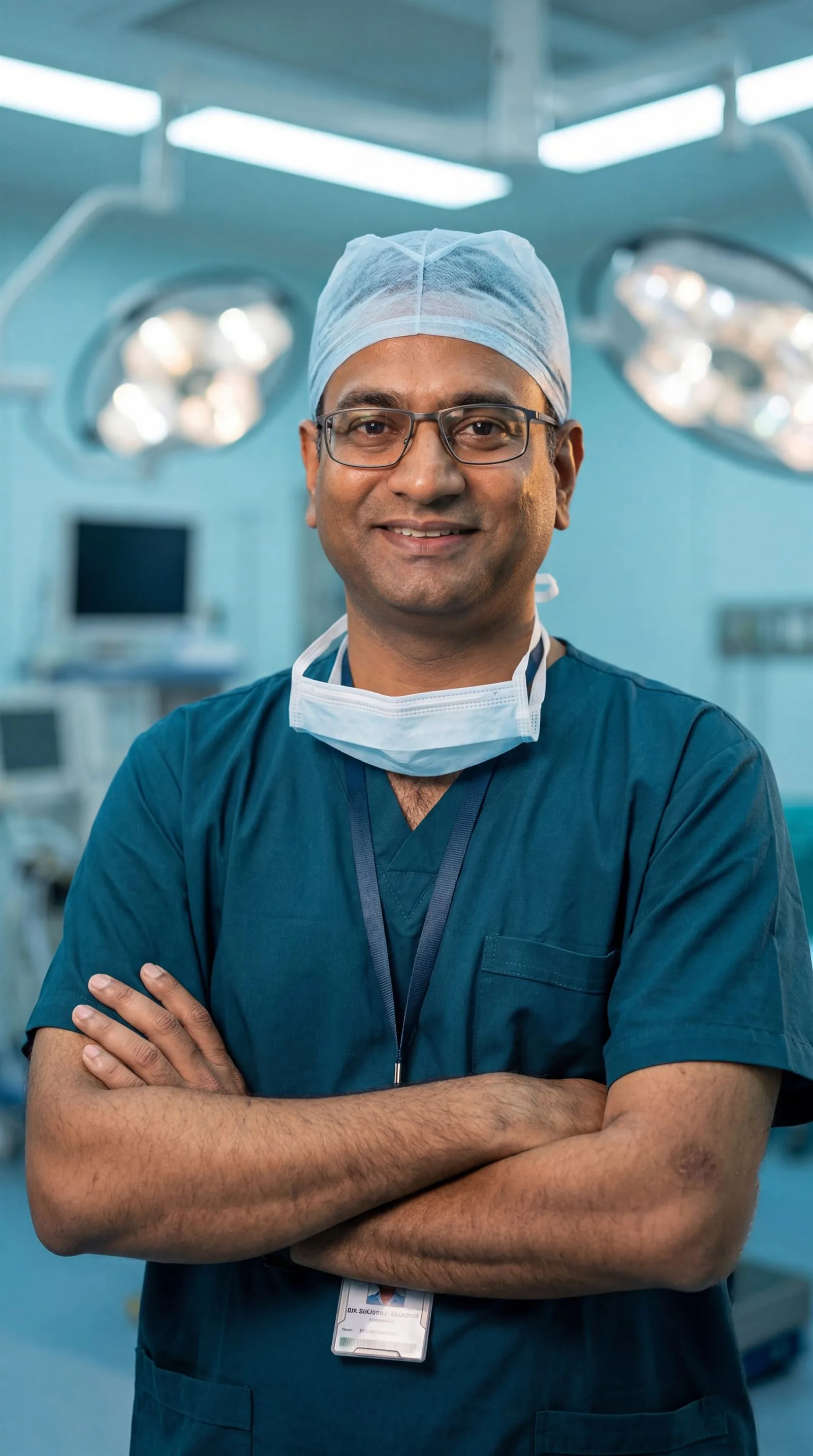
Dr. Sujeeth Kumar Bashetty
MBBS, MS (General Surgery), FIAGES, FAIS, FALS, DIPMAS, FICRS · TSMC Reg. No. 61440
Verified Google reviews from Dr. Sujeeth Kumar’s 4.9★ rating (150+ patients)
“Good doctor. He is very simple and gentle in his behavior. He will give sufficient time to each patient. He studies the patient and disease meticulously. He prefers surgery only when it is really required.”
“Very good doctor and kind at heart. Gives maximum time to hear patient views. After treatment, he himself calls patients and follows up — a rare quality in doctors nowadays.”
“My favourite Doctor is Dr. Sujeeth. He treats well. I always go to him only. I strongly recommend everyone to go to him.”
What are piles?
Many patients silently endure bleeding, pain, and discomfort for years before seeking help. You do not have to live with this condition: discreet and effective treatment is available.
Haemorrhoids (piles) are enlarged, swollen blood vessels in and around the rectum and anus. They are classified as internal haemorrhoids, inside the rectum and often causing painless rectal bleeding; external haemorrhoids, under the skin around the anus and typically painful and visible; and mixed haemorrhoids, a combination of both.
Piles are graded from Grade I (mild, no prolapse) to Grade IV (permanently prolapsed).
Symptoms of piles
- Bright red rectal bleeding during or after bowel movements
- Itching, irritation, or soreness around the anus
- Pain or discomfort, particularly with external haemorrhoids
- A feeling of incomplete evacuation after a bowel movement
- Visible swelling or lump near the anus
Treatment options for piles
Laser haemorrhoidectomy
A minimally invasive option. A precision laser beam is applied to the haemorrhoidal tissue, causing it to shrink and obliterate with minimal damage to surrounding healthy tissue. Benefits: minimal-discomfort procedure, no stitches, minimal bleeding, and same-day discharge.
Stapled haemorrhoidopexy (PPH)
A circular stapler is used to remove a cuff of mucosa above the haemorrhoids, pulling prolapsed tissue back into the anal canal and interrupting its blood supply. Particularly effective for Grade III and IV internal haemorrhoids, with less post-operative pain.
Conventional haemorrhoidectomy
Surgical excision of haemorrhoidal tissue, reserved for very large, complex, or recurrent haemorrhoids. Dr. Sujeeth uses precise technique to minimise post-operative pain and recovery time.
Non-surgical options (grade I–II)
Rubber band ligation, sclerotherapy, and infrared coagulation are office-based procedures for early-grade haemorrhoids. Dr. Sujeeth assesses which patients are suitable for these less invasive interventions.
Why Dr. Sujeeth?
- Laser, stapled, and conventional haemorrhoidectomy techniques
- Discreet, empathetic consultations: no patient should feel embarrassed to seek help
- Apollo Hospitals: advanced day-surgery facility for same-day discharge
- Clear explanation of all treatment options, so patients make informed choices
- 20+ years of general and colorectal surgical experience

Piles, fissure and fistula explained. Dr. Sujeeth on YouTube (in Telugu).
Frequently asked questions
Q: Is laser piles surgery painful?
A: Laser haemorrhoidectomy is designed to be as pain-free as possible. The procedure is performed under anaesthesia, and the precision of laser energy means minimal damage to surrounding tissue, resulting in significantly less post-operative pain compared to conventional surgery.
Q: When should I see a doctor for piles?
A: You should consult a surgeon if you notice rectal bleeding (which should always be investigated), significant pain, persistent prolapse, or if symptoms are affecting your daily life. Do not assume all rectal bleeding is due to piles: a proper examination is essential to exclude other causes.
Q: Do piles always require surgery?
A: No. Grade I and II haemorrhoids are often managed conservatively with dietary changes, topical treatments, or minor office procedures. Surgery is recommended when conservative measures fail or for higher-grade haemorrhoids with significant symptoms.
Q: Will piles come back after surgery?
A: Surgical treatment provides long-term relief for the majority of patients. Adopting a high-fibre diet, adequate hydration, and avoiding straining at stool significantly reduces the risk of recurrence.
పైల్స్ (మొలలు) అంటే మలద్వారం లోపల మరియు చుట్టూ ఉబ్బిన రక్తనాళాలు. లేజర్ చికిత్సలో కుట్లు ఉండవు, రక్తస్రావం తక్కువగా ఉంటుంది, అదే రోజు ఇంటికి వెళ్ళవచ్చు. మలంలో రక్తం కనిపిస్తే అది పైల్స్ వల్లే అని అనుకోకుండా తప్పకుండా పరీక్ష చేయించుకోవాలి.
Dr. Sujeeth’s Healthcare Clinic, Manikonda, Hyderabad
Surgery at Apollo Hospitals, Jubilee Hills. Call 99630 09090.