
Laparoscopic gallbladder surgery in Hyderabad
Last updated 11 October 2026
Laparoscopic cholecystectomy is keyhole removal of the gallbladder, most often because gallstones have formed inside it. Most patients go home the same day or the next morning.
All major Mediclaim and cashless health insurance accepted (Apollo Hospitals TPA desk support).

Dr. Sujeeth Kumar Bashetty
MBBS, MS (General Surgery), FIAGES, FAIS, FALS, DIPMAS, FICRS · TSMC Reg. No. 61440
Verified Google reviews from Dr. Sujeeth Kumar’s 4.9★ rating (150+ patients)
“In a most risky condition, he treated my mother (renal transplant patient) in a day-care procedure and avoided hospital admission. Apollo is really fortunate to have a good surgeon like him.”
“Dr Sujeeth is the best laparoscopic surgeon in India. When I visited for consultation, I saw many international patients waiting for his appointment. I strongly recommend Dr. Sujeeth.”
“Very pleased with the doctor. He is caring, empathetic, and you get to establish a connection with the Doctor — which I feel is seldom today. One of the best doctors I have met.”
What is laparoscopic gallbladder surgery?
The gallbladder is a small pear-shaped organ under the liver that stores bile. When stones block its outlet, the result is pain after meals, nausea, and sometimes infection or jaundice.
The operation is performed through three or four small incisions using a camera and fine instruments. The whole gallbladder is removed, not just the stones: stones left behind in a diseased gallbladder simply re-form. Digestion continues normally afterwards, because bile flows directly from the liver to the intestine.
Most patients go home the same day or the next morning and return to desk work in about a week; heavy lifting takes several weeks longer. Not every gallstone needs surgery: silent stones found incidentally are often reasonable to observe.
Conditions treated
- Gallstones (cholelithiasis), symptomatic and complicated
- Gallbladder inflammation (acute and chronic cholecystitis)
- Gallbladder polyps (above 10 mm)
- Common bile duct stones (choledocholithiasis)
- Biliary colic: recurrent right-upper-quadrant pain
- Biliary tract strictures and inflammation
What are the symptoms of gallbladder stones?
Gallbladder disease often presents with characteristic symptoms. If you experience any of the following, a surgical consultation is advisable:
- Severe or cramping pain in the upper right abdomen, especially after meals
- Pain radiating to the right shoulder or back
- Nausea, vomiting, or indigestion after fatty foods
- Fever with abdominal pain, which may indicate acute cholecystitis
- Jaundice (yellow skin or eyes), which may indicate common bile duct involvement
- Dark urine or pale stools
How is laparoscopic gallbladder removal done?
Anaesthesia
The operation is performed under general anaesthesia.
Small incisions
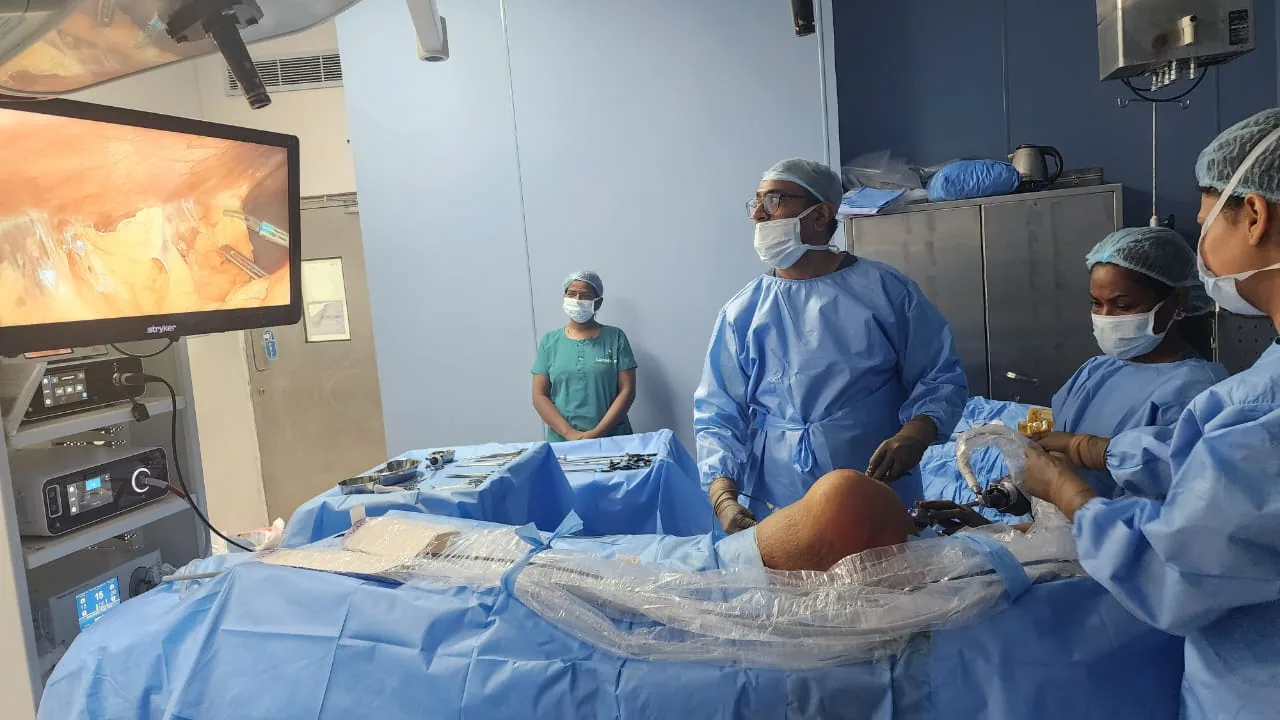
3–4 small incisions of 5–10 mm let in a laparoscope (camera) to guide the surgeon.
Removal
The gallbladder is gently detached from the liver and bile duct before being removed.
Home soon
The procedure typically takes 30–60 minutes. Most patients are discharged within 24 hours and resume light activities within 3–5 days.
What related procedures may be needed?
Laparoscopic bile duct exploration
When gallstones have migrated into the common bile duct, Dr. Sujeeth performs laparoscopic bile duct exploration, avoiding the need for a separate ERCP procedure in selected cases.
Gallbladder polyp surgery
Polyps larger than 10 mm carry a risk of malignant transformation and are treated with laparoscopic cholecystectomy as a preventive measure.
Why choose Dr. Sujeeth?
- 20+ years of laparoscopic surgical experience, with hundreds of cholecystectomies performed
- FAIS, FIAGES, FALS fellowships
- Apollo Hospitals, Jubilee Hills: advanced surgical infrastructure and post-op care
- Day-case surgery available for suitable patients
- Transparent consultation: an honest assessment of whether surgery is necessary
- India Today: Top 7 Surgeons in South India 2022

Are gallbladder stones dangerous? Dr. Sujeeth on YouTube (in Telugu).
Frequently asked questions
Q: Can I live normally without a gallbladder?
A: Yes. The gallbladder stores bile but is not essential for digestion. After removal, bile flows directly from the liver to the small intestine. Most patients experience no dietary restrictions after a brief adjustment period.
Q: Is gallbladder surgery always necessary for gallstones?
A: Not always. Asymptomatic gallstones may be monitored. However, once symptoms begin, especially recurrent pain or complications such as acute cholecystitis, surgery is the recommended and most definitive treatment.
Q: What is the recovery time after laparoscopic gallbladder removal?
A: Most patients are discharged within 24 hours and return to light activity within 3–5 days. Full recovery typically takes 1–2 weeks.
Q: Are there risks with laparoscopic cholecystectomy?
A: As with any surgery, there are small risks including bleeding, infection, and bile duct injury, though bile duct injury is rare and less common with an experienced surgeon. Dr. Sujeeth discusses all risks transparently during your consultation.
పిత్తాశయంలో రాళ్లు నొప్పి కలిగిస్తే, ల్యాపరోస్కోపిక్ శస్త్రచికిత్సలో చిన్న కోతల ద్వారా పిత్తాశయాన్ని పూర్తిగా తొలగిస్తారు. చాలా మంది 24 గంటల్లో ఇంటికి వెళ్తారు, సుమారు వారంలో డెస్క్ పనికి తిరిగి వస్తారు. పిత్తాశయం లేకపోయినా జీర్ణక్రియ సాధారణంగానే ఉంటుంది.
Dr. Sujeeth’s Healthcare Clinic, Manikonda, Hyderabad
Surgery at Apollo Hospitals, Jubilee Hills. Call 99630 09090.